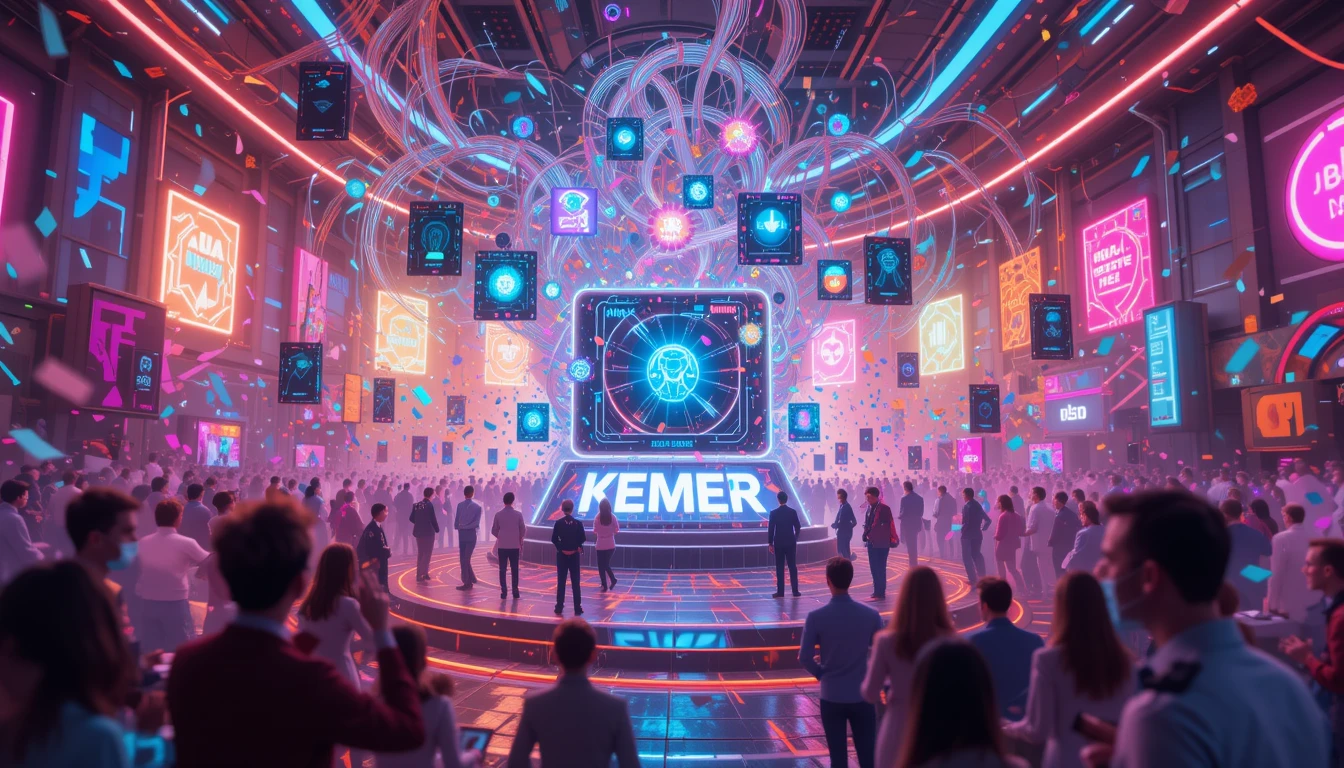
Can AI Make Us Laugh Like Humans Do? The Meme Showdown
AI vs Humans: The Ultimate Meme Showdown
Explore the battle between AI-driven memes and human creativity in the digital era – a deep dive into meme culture, viral trends, and ethical considerations.
This article explores the evolution of meme culture and the emerging role of artificial intelligence in shaping digital humor. It examines how AI-generated content competes with human creativity to capture fleeting cultural moments and spark laughter. By unpacking viral trends, the nuances of humor, and ethical concerns, this guide offers insight into the dynamic interplay between technology and the art of making us laugh.
The Evolution and Impact of Memes
Memes have become a ubiquitous medium shaping digital communication in a way that few other cultural artifacts have managed. In today’s hyper-connected world, a meme is not merely a funny picture or a quirky caption; it is a digital snapshot capturing moments, raw emotions, and the undercurrents of social commentary. Imagine scrolling through a newsfeed and stumbling upon an image that perfectly encapsulates the collective mood of millions in a single glance. This is the power of memes – they serve as a universal language, bridging cultural divides and echoing shared experiences in our fast-paced lives.
Memes today are more than a series of images or videos tossed around on social networks. They encapsulate the zeitgeist, drawing on the socio-political and cultural narratives of our times. In their very essence, memes are ideas that spread exponentially, much like the proverbial wildfire. They manage to capture panic, joy, irony, and sometimes, even political dissent, in a format that is as accessible as a text message. This phenomenon echoes the immersive reports found in The Verge and Wired articles, where the intersection of culture and technology is explored in depth.
Memes operate on multiple levels – they are at once ephemeral jokes and lasting digital records of our shared consciousness. Their viral nature is due in part to their inherent relatability. Consider the twofold function of a meme: on one hand, it reinforces social bonds by contextualizing inside jokes, and on the other, it plays a role as a vessel for social and political commentary. This duality is reminiscent of the analyses featured in The New York Times and Forbes, where the dynamics between cultural phenomena and modern communication are continuously dissected. When people share memes in group chats or forums, they are not merely trading humor; they are engaging in a form of collective storytelling reflective of ever-changing social perceptions.
To further illustrate, consider the typical viral meme that captures the absurdity of everyday life in modern society. It might reference current events or tap into cultural symbols that instantly resonate across different demographics. For example, a meme illustrating the frustrations of commuting might spread like wildfire across different cities and even different countries, attesting to how widely shared everyday experiences can foster a sense of global camaraderie. This dynamic serves as a testament to the power of digital media in reinforcing human connections, much like the discussions on platforms such as Business Insider have shown regarding contemporary communication trends.
Furthermore, memes have transcended the boundaries of internet subcultures to become mainstream tools for communication. They have infiltrated political discussions, advertising campaigns, and even academic circles. The notion that memes mirror the diverse layers of human interaction and digital culture implies that they are more than mere entertainment – they are an evolving language. Their ability to capture both the ephemeral moment and the enduring mood of society is profound, shaking up conventional modes of media consumption and interaction often elaborated upon in thought pieces on HuffPost and BBC.
In addition, memes have become versatile instruments in the sphere of social commentary. They offer succinct critiques and layered insights into our societal norms and human behavior. As digital snapshots, they manifest the quirks of our daily lives, from mundane routines to highly charged political events. In many cases, a meme simplifies a complex issue into an image that encourages reflection while simultaneously inciting humor. This quality has allowed memes to become not just a form of communication but a mechanism for cultural change and social influence. Their viral potential, as well as their capacity to transcend borders, are subjects that get extensive coverage in digital innovation circles such as TechCrunch and Scientific American.
Memes echo our collective experiences in microcosm. Every meme shared online is a pulse check on the cultural zeitgeist, reflecting both the light-hearted and the profound aspects of contemporary life. They serve as digital mirrors that highlight our collective concerns, laughter, and even our shared vulnerabilities. This vibrant digital lexicon continues evolving, constantly redefined by the contributions of millions of netizens worldwide. Ultimately, memes are a concrete reminder that even in a highly digitalized era, the fundamental human need for connection, understanding, and a good laugh remains untouched.
How AI is Shaping Meme Creativity
In an era where artificial intelligence already permeates various creative processes, AI has stepped boldly into the realm of meme creation. The digital landscape now sees a collaboration – albeit a sometimes clumsy one – between technology and human creativity. The advances in AI algorithms designed for content creation, including writing, composing music, and generating artwork, have extended their reach into the world of memes. Behind these algorithms lies a powerful engine fueled by massive datasets and sophisticated pattern recognition techniques, akin to what is detailed in insightful analyses on MIT research publications.
The fundamental basis for AI-generated content revolves around finding and replicating patterns. Trained on countless images, texts, and cultural references, AI learns to simulate elements of creative processes that form the backbone of meme culture. When a system begins to churn out meme formats that mimic popular internet aesthetics, it draws heavily on the meme databases spanning decades of digital culture. This is similar to how content on platforms like National Geographic unravels layers of natural patterns to inform its storytelling approach. However, despite the impressive computational power behind these algorithms, subtle nuances often escape their grasp.
One key discussion point is the juxtaposition between AI’s data-driven capabilities and the spontaneous essence of humor. When a meme resonates, it typically does so because it taps into a shared moment of vulnerability or joy – something deeply entrenched in human experience. AI can simulate the structure and format of a successful meme, yet its versions frequently lack the intuitive spark that transforms a good meme into a viral sensation. The technology is adept at following trends and deploying current cultural references, but the real magic of humor involves a certain unpredictability that even the best algorithms find difficult to capture. This tension between systematic output and spontaneous hilarity is often explored in tech critiques in publications like Wired.
Consider the AI-generated meme that went viral for a brief period. Its design followed the classic template and tactically employed popular cultural references. Initially, it may provide a momentary chuckle, reflecting an understanding of trending topics. However, subtle cues – like nuanced sarcasm or spontaneous wit – often remain absent. The result is a creative output that, while technically proficient, might feel somewhat cold or detached compared to a meme forged from lived experience and emotional insight. Furthermore, the algorithm’s reliance on historical data implies that it sometimes perpetuates outdated references. As seen in discussions on Business Insider, the rapid pace of cultural change leaves little time for algorithms to evolve, occasionally resulting in attempts that miss the humor mark entirely.
The integration of AI into meme creation also offers intriguing possibilities for personalization and innovation. Imagine an AI that can suggest a meme template perfectly tailored to current trends, or generate clever captions designed for specific audiences. Such innovations could lead to a dynamic partnership where technology assists in sparking creative ideas without fully replacing the human element. Innovations in this area echo the democratizing potential of AI as discussed on sites like TechCrunch. However, challenges remain in ensuring that AI-generated humor mirrors the adaptive, culturally aware aspect of human creativity.
While AI can indeed learn from massive datasets, its pattern recognition capabilities often distill humor into a series of formulas and structures that miss the intended punch. The challenge for algorithms is to capture the spontaneous interplay between cultural context and timing – elements that are inherently unpredictable. AI can simulate a format, much like a chef following a well-known recipe, but it may not add the unexpected spice that elevates the dish into a culinary masterpiece. This analogy is often brought up in humorous tech discussions on HuffPost, pointing out that the art of meme creation cannot be fully standardized.
Moreover, the successes of AI in this creative field are often punctuated by notable failures. While some AI-generated memes have succeeded in capturing a temporary cultural moment, many end up feeling forced or misaligned with evolving humor. This misalignment provides a fascinating case study in how human creativity often outshines even the most advanced algorithms simply because humor is deeply subjective and contextual. Publications such as The New York Times illustrate that while technology offers powerful tools, the unpredictable human spirit remains central to authentic humor.
The role of AI in meme creation is also a reflection of our broader relationship with technology in creative processes. Just as AI is being used to draft articles or design digital art, its foray into meme generation is part of a larger dialogue about automation in creativity. Here, AI serves as a valuable assistant that can help refine ideas, optimize formats, and generate content at scale. Yet, while it can help amplify trends, there remains a stark difference between generating a meme and generating a laugh. This distinction highlights that creativity is not solely a product of algorithms but a living process fueled by the interplay of emotion, context, and perception.
Overall, the evolution of AI in meme creativity underscores the delicate balance between technological promise and the irreplaceable charm of human insight. As AI continues to improve, its role in shaping digital humor will likely become one of cooperation rather than competition. The collaboration between human meme creators and AI-generated suggestions could ultimately refine and elevate meme culture, even as it raises compelling questions about what it means to create humor in a modern, data-driven world.
Human vs AI: The Humor Showdown
The creative contest between human ingenuity and AI algorithmic processing in the realm of humor is nothing short of a modern-day showdown. One can liken it to a battle between a master storyteller, whose wit is honed through lived experiences, and an adept calculator that distills existing narratives into predictable patterns. While AI is remarkably capable of analyzing voluminous data and recognizing trends, the unpredictable spark of human humor remains a formidable force that algorithms have yet to replicate fully.
Human meme creators are not only repositories of cultural context but also experts in intuitive timing and emotional resonance – the very ingredients of a great joke. They craft memes that often become legendary because they encapsulate moments of collective consciousness. These memes do more than just prompt a chuckle; they evoke a sense of shared identity and belonging. For instance, a meme that humorously captures the trials of daily life, one that resonates with the universal struggles of modern existence, is a testament to the power of human creativity. Such outcomes are celebrated in diverse media outlets including BBC and National Geographic, where cultural nuances are appreciated as much as technological advances.
AI, in contrast, relies on established patterns and datasets to generate content. While this approach can yield impressively structured memes, the resulting output may lack the depth of context that gives life to a truly memorable meme. AI-generated memes might hit the format perfectly – mimicking popular templates, employing known cultural tropes, and even replicating the style of successful memes. However, the critical difference lies in emotional resonance. Human meme lords usually incorporate the unexpected twist, the spontaneous play on words, or the subtle cultural reference that speaks to the viewer on a personal level. This subtlety and spontaneity often elude AI’s algorithmic procedures, leading to creations that, while neat, can feel somewhat sterile. As discussed in tech analyses on Scientific American, this gap is a clear testament to the ongoing need for human creativity in the age of automation.
The humor showdown becomes even more interesting when common scenarios are examined. For example, consider a meme capturing the absurdity of navigating modern office life. A human creator can weave in experiences of relatable frustration with a twist of irony that resonates because it draws on personal experience. In contrast, an AI-generated counterpart might process the common elements of office humor, yet its attempt might result in generic content that feels overly formulaic – lacking the spontaneity that gives rise to genuine laughter. This phenomenon highlights why many AI-generated memes, despite their technical proficiency, occasionally come off as forced. Their humor is algorithmic and predictable, rather than the rich, multifaceted expression found in handcrafted creations.
Further, human meme creators have the advantage of belonging to the cultural conversation in real-time. They observe micro-trends, react instantaneously to emerging events, and infuse their work with the zeitgeist of the moment. They do not merely follow a blueprint; they innovate by pointing out the absurdities and ironies that technology sometimes misses. Thought pieces in Forbes often highlight that this ability to capture fleeting cultural nuances is what sets human creativity apart from algorithmic trends. A uniquely human meme often breaks the mold – it surprises, challenges perspective, and reminds audiences why laughter is such an essential human trait.
It is not to say that AI lacks potential or creativity altogether. In collaborative scenarios, AI can act as a brainstorming partner, contributing templates, data-driven insights, and suggestions that fuel human innovation. This symbiotic relationship can ultimately push the boundaries of meme creation, echoing the transformative ideas discussed on TechCrunch. However, the inherent limitations of AI in grasping cultural subtleties underline that, for now, the humor showdown is squarely in the realm of human ingenuity. There remains an unmistakable magic in memes born out of genuine lived experience – a magic that is difficult to code.
This ongoing contest between human and machine creativity not only enriches the landscape of digital humor but also invites broader reflections on the role of technology in shaping our cultural narratives. As memes become more central to our digital conversations, the debate on human versus AI humor becomes a microcosm of larger discussions about creativity in an era defined by information and automation. This dynamic interplay attests to the enduring power and uniqueness of human creativity in a technologically advancing world.
Future Prospects and Ethical Considerations in Meme Generation
Looking ahead, the evolution of meme creation powered by AI is a canvas painted with both vibrant potential and significant ethical challenges. The prospect of AI not only assisting but also personalizing the production of memes is tantalizing. While the underlying intent is to reinvigorate digital humor, it is equally important to address the concerns associated with algorithmic bias and the ethical control over content. As AI tools become increasingly integrated into creative frameworks, considerations around fairness, cultural sensitivity, and accountability must take center stage.
One promising development is the potential for AI to serve as a creative assistant rather than the primary creator. In this model, AI can help streamline the process of meme generation by offering suggestions based on trending topics or by refining the structure of a joke. Such assistance can act as a catalyst, enabling human creators to refine their ideas and craft memes that resonate on a deeper level. Efforts in this direction have been highlighted in articles on Wired, where the interplay between human creativity and machine assistance is celebrated as a path to new artistic expressions.
Nonetheless, this integration of AI into the creative process raises pressing ethical issues. One of the key concerns is algorithmic bias – the risk that the data input to these systems might contain cultural or social biases that then become amplified through the memes themselves. For example, if the training datasets predominantly reflect a specific demographic or cultural perspective, the resulting memes might unintentionally exclude or marginalize other viewpoints. Research articles on National Geographic have discussed how even well-intentioned algorithms can inadvertently propagate stereotypes, underscoring the importance of a diverse and balanced dataset.
There are additional concerns surrounding content control. With AI-generated memes likely to be widely circulated, questions about who controls this content become increasingly salient. The very power of memes to influence public opinion – be it benign humor or potent social commentary – demands a stringent ethical framework that ensures accountability. Critical evaluations in forums like HuffPost underscore that the ethical governance of AI in media must prioritize transparency, fairness, and respect for all cultural contexts.
AI’s potential to personalize meme generation for niche audiences also brings up interesting implications regarding creative diversity. While personalized suggestions might tap into individual humor preferences, they could also lead to echo chambers where conventional tastes are endlessly reinforced. The challenge, then, is to balance personalization with exposure to fresh, cross-cultural ideas that enrich the collective conversation. This balance is essential not only for maintaining the dynamism of digital humor but also for ensuring that the cultural tapestry represented by memes remains as rich and multifaceted as possible.
In addition to bias and control, questions of intellectual property arise. As AI systems generate content, determining the ownership and originality of a meme becomes a legal and ethical maze. Content generated by AI still relies on pre-existing human cultural expressions, and as such, recognition of the original sources and inspiration is essential. Discussions on platforms like Business Insider highlight that as the boundaries between human and machine creativity blur, the need for clear ethical guidelines becomes even more pronounced.
Looking into the future, a collaborative ecosystem where AI acts as a supportive tool alongside human creativity appears to be the most promising model. The successful integration of AI into meme culture will likely depend on innovative methods for curating and moderating content to ensure that the creative spark of human ingenuity remains at the forefront. Such a system would not only safeguard cultural sensitivity but would also leverage technological tools to bring out the best in human creative expression. This paradigm shift, analyzed by commentators on The Verge, emphasizes that technology should always augment, not replace, the deeply personal aspects of artistic creation.
Moreover, the ethical considerations extend into the political realm, where memes have emerged as influential tools in shaping public narratives. As memes increasingly serve as vehicles for political commentary, the responsibility to prevent misinformation and harmful content grows. Ensuring that AI-generated memes contribute positively to public discourse rather than exacerbate division is an ethical imperative. Thought leaders in fields of digital ethics, as featured in Scientific American, stress that ethical oversight in this field must be robust and multifaceted, addressing issues from data integrity to cultural sensitivity.
Balancing these ethical challenges with the creative potential of AI in meme generation is no small feat. It requires a collaborative effort among developers, cultural critics, lawmakers, and the creative community. By establishing rigorous ethical standards, the digital landscape can benefit from the efficiencies of AI without compromising the soulful connection that human creativity brings to humor. The vision is one where AI supports the human touch, guiding creative expression without overshadowing the unpredictable beauty of spontaneity.
Conclusion: Embracing Creativity in the Digital Age
The journey through the evolution of memes and the unfolding impact of AI on content creation paints a vivid picture of our digital era. Memes, once simple images passed around for laughter, have evolved into complex cultural artifacts that document our collective experiences and echo our shared stories across global networks. Their viral nature, as evidenced by discussions on Forbes and The New York Times, stands as a testament to the enduring need for human connection and empathetic communication. They remind us that even in a realm dominated by rapid information exchange, there is still a profound value in humor that resonates deeply with the human spirit.
The exploration into how AI is shaping meme creativity further illuminates a pivotal trend in modern communication. With algorithms learning from vast datasets and refining techniques to generate digital content, AI has undeniably become a powerful tool in the creative arsenal. Yet, as seen in the nuances of human versus AI humor, the true essence of creativity remains intertwined with the unpredictable, the spontaneous, and the deeply felt personal insights that only human experience can provide. The battle for genuine laughter continues as human meme creators harness their cultural intuition against the formulaic precision of AI-generated memes – underscoring that while machines can assist, the heart of humor lies with humans.
Looking forward, the future prospects of integrating AI into meme generation are as exciting as they are ethically complex. The potential for AI to refine formats, personalize creative output, and even catalyze new trends presents a horizon filled with innovation. However, it is paramount to remember that as technology advances, the ethical dimensions must be addressed with uncompromised diligence. Ensuring transparency, curbing biases, and safeguarding cultural narratives are challenges that accompany this journey. Responsible oversight and thoughtful integration will ensure that technological tools remain as aids to human creativity rather than replacements. This balance is essential for preserving the emotional and cultural layers that define our shared digital experiences – a balance champions across platforms like TechCrunch and The Verge.
In this digital age, the confluence of human insight and advanced technology offers an exciting paradigm where creativity is continually redefined. Memes and digital humor serve as cultural snapshots that capture both the fleeting and the profound. While AI can generate viral content and provide innovative nudges in creative processes, it is the enduring fire of human ingenuity that continues to illuminate the landscape of humor. This enduring interplay invites continued exploration and conversation among creatives, technologists, and cultural critics alike.
Ultimately, the digital age is not a battleground for technology versus humanity, but a dynamic spectrum where both forces have critical roles to play in shaping how ideas spread and how humor connects us all. Embracing this coexistence means celebrating the unpredictability, the emotional depth, and the vibrant diversity that only genuine human creativity can offer – while also leveraging AI as a supportive tool for innovation. As society moves forward, this balance promises not only to enrich the meme culture but also to reinforce the timeless value of laughter and shared human experience. This balanced perspective is one that resonates with the thought leadership of esteemed voices in digital creativity, including insights found in Psychology Today and MIT.
In closing, the evolution of memes and the integration of AI into digital humor exemplify a broader narrative about creativity in modern society. The lessons learned from this interplay are clear: technology can catalyze innovation, but it is the unpredictable spark of human ingenuity that truly drives cultural evolution. As debates continue and new formats emerge, the imperative remains to harness these powerful tools – mindfully, ethically, and always with an eye toward preserving the rich tapestry of human experience. The ongoing dialogue between human creativity and AI assistance invites every participant to reflect on how best to balance the merits of both in our shared digital future.
The digital realm, evolving as it is, owes much of its vibrancy to the unpredictable charm of genuine creativity. Whether a meme sparks a laugh, a conversation, or even a movement, its impact lies in its capacity to capture the often elusive essence of human emotion in a few compelling frames. The stage is set for a future where technological advances empower storytellers rather than overshadow them – where advancements in AI open new avenues for expression, all while the unique, irreplaceable creativity of human minds remains at the forefront. In this spirit, embracing the dynamic interplay of technology and human insight will continue to define the cultural and creative dialogues of tomorrow.
By inviting further exploration and robust conversations around the integration of AI and the evolution of meme culture, this perspective offers not only a reflection on current trends but a call to action for responsible innovation. Technologists, cultural commentators, and creative minds are encouraged to engage, debate, and collaborate to ensure that as digital humor evolves, it does so in a manner that enriches the human experience rather than diminishes it. After all, in a world inundated with rapid technological change, preserving the essence of laughter and the cultural bonds it creates is a timeless, invaluable pursuit.