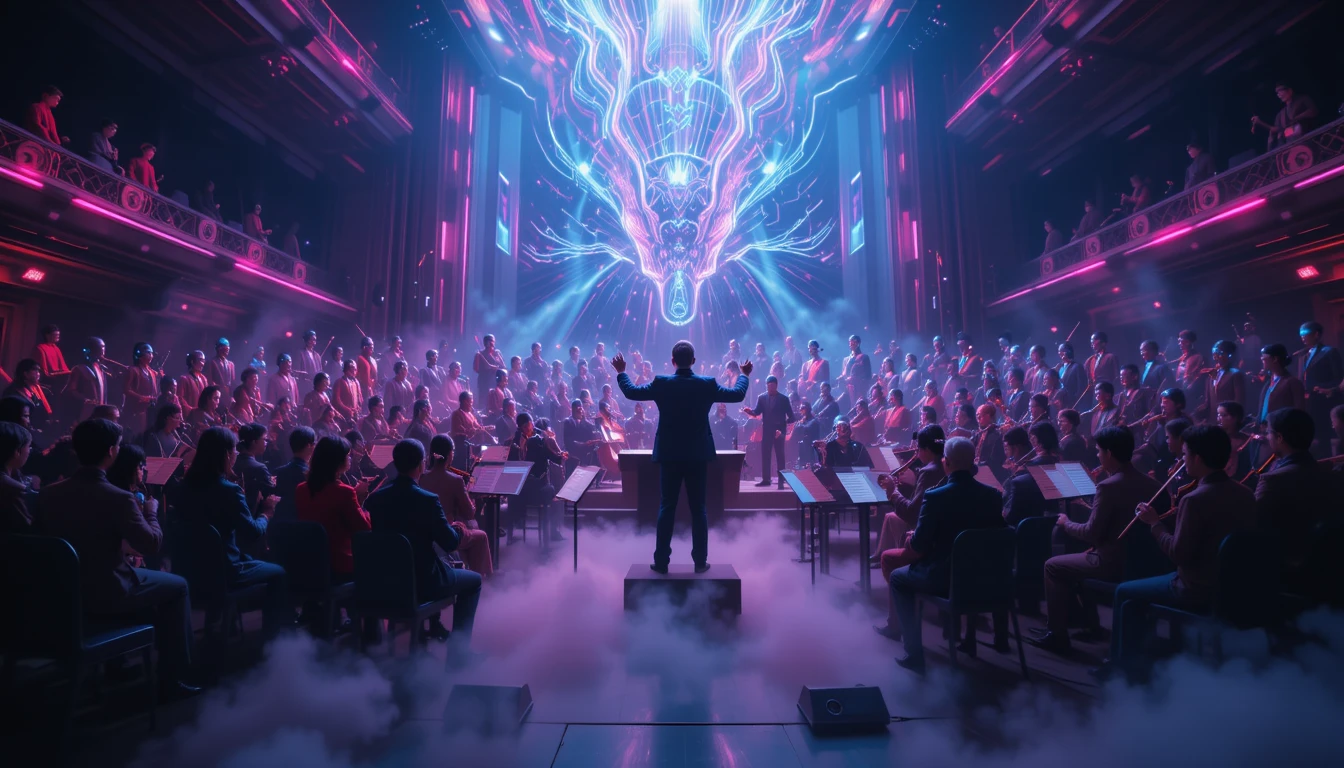
AI vs Human Soul in Music The Battle Shaking the Industry
AI vs the Soul of Music: The Battle Transforming the Industry
Discover the clash between AI-created tracks and genuine musical expression, the legal battles, and the future of creativity in the evolving music industry.
This article explores the seismic shift occurring at the intersection of technology and music. It dives into how AI-powered music is challenging the long-held traditions of human creativity and emotional expression. The discussion covers historical milestones, current controversies, and the legal and ethical dilemmas that are reshaping the industry landscape.
1. The Evolution of AI in Music: From Pioneering Experiments to Industry Disruption
Imagine the first spark of a computer running an algorithm that creates sounds and textures never heard before. In a way, early AI in music was like a restless toddler scribbling on a wall – full of unrefined potential yet hinting at masterpieces to come. The musical landscape, historically fueled by the raw emotions of human expression, has encountered a new force that both fascinates and unsettles passionate creators worldwide. Indeed, the journey of AI in music stretches back to the mid-20th century when pioneers like Lejaren Hiller began experimenting with computer-generated compositions. Hiller’s seminal work, the Iliac Suite, is recognized as one of the first major forays into algorithmic composition and represents a critical turning point in both music and technology. For those interested in exploring the early technical innovations behind this revolution, Oxford Music Online serves as an excellent repository of historical context and scholarly analysis.
In the ensuing decades, the experiments in compositional AI expanded with figures like David Cope, who pushed the boundaries by developing musical intelligence systems capable of analyzing classical scores and then composing pieces that eerily echoed the styles of Bach and other musical titans. These early ventures laid the groundwork for today’s sophisticated AI-driven music tools. David Cope’s work, in particular, is often celebrated as a bridge between the strict logic of computational algorithms and the ineffable qualities of musicality that had been historically considered the exclusive domain of human creativity. Interested readers can delve deeper into his methodologies at academic platforms such as ScienceDirect.
Fast forward to the present, and the pulse of the industry beats to a new algorithmic rhythm. Modern AI-powered tools, such as iZotope’s RX and Ozone, have revolutionized the production process by automating mixing, mastering, and even songwriting. These platforms are not only streamlining workflows but are also enabling producers to experiment in ways that were once unimaginable. While users marvel at the speed and efficiency these tools provide, many see them as harbingers of a vastly different creative future. The pace at which a full track can be generated today might remind some of a high-speed digital printer, churning out compositions in seconds. Music technology publications like Wired and The Verge have extensively chronicled this transformative era, capturing both the promise and the challenges thatlie ahead.
In this transformative era, startups such as Sunno are emerging as catalysts for democratizing music creation. The concept is deceptively simple: by providing advanced, accessible tools to anyone with a laptop, platforms like Sunno dismantle longstanding barriers that previously kept innovative music production in the hands of a select few. Timbaland’s recent launch of Stage Zero, featuring his digital artist Tata, underscores the seismic shift underway. This initiative aims to blend cutting-edge technology with traditional musical creativity, empowering amateurs and professionals alike to experiment with AI-generated compositions. As reported by Billboard and other trusted music industry outlets, the advancements underway signal a broader trend of technological inclusivity and represent a hopeful new chapter in creative expression.
Yet, beyond the technical marvels lies a profound transformation in the cultural and economic fabric of the music industry. The advent of programmatic composition tools is not without its detractors, each mindful of the traditions that have defined the art form for centuries. The early experiments of Hiller and Cope have matured into platforms capable of delivering entire musical experiences with minimal human intervention. As these platforms continue to evolve, the implications for the industry extend well beyond convenience and efficiency. The merging of human emotion with AI-driven mechanics is creating a space where passion meets precision – a junction that may redefine what it means to be a musician in the modern era. Explorations of this evolving dynamic can be further read about in articles on Rolling Stone.
Consider the scene: on one side of the creative spectrum, traditional musicians labor for years perfecting their art, and on the other, new-age innovators are leveraging AI to produce hits almost instantaneously. The democratization of music creation through AI-driven platforms offers a double-edged sword – one that empowers entry-level creators while challenging the established norms of craftsmanship. This evolution not only redefines the role of the musician but also compels industry leaders, lawmakers, and enthusiasts to reimagine the ownership, value, and authenticity of creative works. The dialogue on these issues has been extensively covered by platforms like NPR, providing deep dives into the synthesis of technology and artistry.
The evolution of AI in music is emblematic of broader technological trends reshaping industries around the globe. As the digital revolution continues to progress at breakneck speed, the transformation seen in the music world mirrors similar disruptions in fields such as publishing, visual arts, and even sports analytics. In this context, AI stands as both a tool and a transformative force; it is democratizing while simultaneously intensifying competition. Developers and innovators from diverse disciplines are now looking to AI not only as a product but also as a co-creator in the artistic process – an idea that challenges the traditional boundaries between the creator and the creative. Insights into these emerging trends are discussed in detail by CNN and other forward-thinking media outlets.
In sum, the evolution of AI in music is far more than a technological upgrade; it is a cultural renaissance. With every new innovation, the landscape of music production is redefined, offering novel ways for artists to explore their creative impulses while potentially sidelining the labor of traditional musical craftsmanship. As history unfolds, the dynamic interplay between human emotion and digital precision continues to captivate industry observers and consumers alike. In tracking these pioneering experiments to the disruptive forces of today, it becomes apparent that the role of AI in music is not merely to replicate sound but to challenge the very core of how music is conceived, produced, and experienced in a rapidly evolving digital age. For further exploration on this sweeping transformation, readers might appreciate expert perspectives available at MIT Technology Review.
2. The Controversial Clash: AI Versus Human Creativity
At the heart of the digital revolution in music lies a profound and sometimes polarizing debate: can algorithm-driven production ever truly replicate or replace the soulful, unfiltered expression of human creativity? The recent unveiling of AI-powered projects, such as Timbaland’s Stage Zero and the digital persona Tata, has sparked fierce criticism from both industry insiders and devoted audiences. The controversy is not merely about aesthetics or technical proficiency – it grapples with larger questions about identity, authenticity, and what really constitutes art. This clash represents a modern iteration of an age-old tension between innovation and tradition, and the results have been nothing short of explosive. Media giants like The Guardian have captured the fervor with vivid headlines, marking this moment as one of the most significant cultural debates of our time.
The Backlash: Fans, Critics, and the Emotional Pulse
The launch of Stage Zero set off a social media firestorm that remains vivid in memory. Fans and critics reacted almost instantly, with some decrying the move as a betrayal of music’s soul. Social media platforms became battlegrounds where digital dissent met technological triumph. The outrage stemmed from a visceral belief that replacing the struggles, stories, and imperfections of human artists with algorithmic precision could result in the erosion of what many consider the heart and soul of music – its raw ability to connect and convey emotion. Platforms such as BBC have since provided extensive coverage on how this backlash is emblematic of a resistance to change, reflecting underlying concerns about authenticity and the intrinsic value of human craftsmanship.
Critics argue that while the speed and efficiency of AI in creating music is undeniably impressive, it lacks those ineffable qualities that imbue music with life. The passionate retorts on social media echoed the sentiment that human creativity is more than just data and formulas – it is an art shaped by individual experiences, cultural contexts, and emotional depth. For instance, one well-known producer, Young Guru, expressed his dismay by stating, “Your voice is powerful and way too important to do anything like this. Human expression can never be reduced to this.” Such sentiments resonate with many who believe that, regardless of technological advancement, there remains a unique magic in music born from human struggles and triumphs. Insights into cultural sentiments are also discussed by Rolling Stone, which has covered similar debates surrounding the balance of traditional and technological creativity.
Cultural Debates: The Soul of Hip Hop and Beyond
The cultural implications of this technological shift are profound, particularly within genres like hip hop where storytelling and personal experience are integral to the art form. Hip hop, often celebrated for its capacity to reflect the realities and struggles of marginalized communities, is now at the center of a debate over whether emotional authenticity can be algorithmically replicated. Critics worry that when AI generates beats or even complete tracks, it might strip away the layers of meaning formed by decades of social commentary, struggle, and triumph. In many ways, this debate mirrors the concerns once raised about the use of synthesizers in the 1970s – a time when electronic sounds were seen as a threat to the organic roots of music. However, as history shows, synthesizers eventually became an accepted and even celebrated element of modern music production. Yet, the speed and scale at which AI operates today introduces a whole new dimension to the conversation, making the debate as much about rapid technological change as it is about preserving cultural heritage. Detailed explorations of these cultural debates can be found at The New York Times.
This contemporary clash raises questions that extend beyond hip hop or any single genre. At its core, the debate challenges the definitions of creativity and artistic merit. Can a song crafted by lines of code ever truly encompass the story, vulnerability, and passion that a human artist pours into their work? Some argue that while AI tools can provide innovative ideas and even mimic stylistic nuances, the emotive power derived from personal experiences remains uniquely human. Other experts imagine a future where hybrid collaborations could flourish – with machines serving as co-creators that help refine ideas while human artists imbue them with soul. For further insights into innovative collaborations at the intersection of art and technology, NPR offers a series of thought-provoking discussions on the topic.
Industry Insider Opinions: Celebrating and Challenging AI
Within the corridors of the music industry, opinions remain deeply polarized. Some insiders celebrate the potential of AI as a creative partner that can unlock new horizons. They see it as a tool capable of accelerating the creative process, providing inspiration and aiding in experimentation. Industry leaders like Helmets Beams, CEO of SonarWorks, envision a future where the barriers to music production are dismantled, opening up the industry to a diverse array of voices previously sidelined by economic and technological constraints. Proponents argue that AI-driven tools can democratize creative production, essentially handing the power of sophisticated music creation to anyone with access to a computer. This perspective is bolstered by insights from technology analysts at ZDNet, who have noted that many advancements in creative software have historically expanded the creative pool.
Conversely, there is a robust contingent within the industry that challenges the speed and automation of AI. These critics emphasize that music has always been an art form defined by pain, passion, and the human condition. They claim that the process of creating music is not just about assembling notes and rhythms but about conveying an emotional narrative that resonates on a deeply personal level. The backlash following the launch of AI projects like Stage Zero is symptomatic of this longstanding belief in the irreplaceable quality of human touch. Critics are quick to point out that while algorithms may replicate patterns and structures, the spontaneous, imperfect, and emotionally charged moments that define great music remain beyond the reach of artificial intelligence. Engaging analyses on this subject, where the conversation expands beyond mere technicalities, are often featured on platforms such as CNN.
Ultimately, the controversial clash between AI and human creativity forces a reckoning with fundamental questions: What constitutes art? And can technology ever fully encapsulate the human spirit? As these debates intensify, the crossroads at which the music industry finds itself is reminiscent of earlier technological shifts in other creative sectors. Whether one views AI as a threat or as a new frontier of creative exploration, the conversation continues to evolve. The synthesis of algorithmic efficiency and human emotion may very well define the next era of music, challenging entrenched paradigms and inspiring a blend of innovation and tradition that neither can easily replicate on its own. For additional perspectives on the evolution of creative industries, resources like MIT Technology Review provide a comprehensive look at similar trends across different sectors.
3. Legal and Ethical Frontiers Shaping Music’s Future
The transformative surge of AI in music does not come without its labyrinth of legal and ethical dilemmas. As AI-generated content rapidly becomes a staple on streaming platforms, the traditional guardrails of copyright and ownership have been upended. In this brave new digital frontier, questions abound: Who truly owns a piece of music crafted by an algorithm? And how can originality and intellectual property be protected when the boundaries between human creativity and machine generation are increasingly blurred?
Legal Challenges: Navigating Uncharted Terrain
A pressing issue at the heart of this legal conundrum is the stance taken by established institutions like the United States Copyright Office. With recent declarations that AI-generated content cannot be safeguarded under current copyright law, the entire business model of the music industry is thrown into uncertainty. This decision poses a direct challenge to startups such as Sunno, which aim to democratize music creation by harnessing the power of advanced algorithms. The Recording Industry Association of America (RIAA) has taken its stand by suing platforms that it believes are capitalizing on the collective creative efforts of human artists without proper acknowledgment or compensation. For an in-depth analysis of these legal intricacies, legal scholars often refer to case studies available on platforms like Law.com.
The legal ambiguities extend far beyond copyright registration. If a hit song emerges from an algorithmic process, several questions immediately arise: Who is liable if the song inadvertently plagiarizes human-made melodies? Is there a way to reconcile the rapid pace of AI production with the slower, methodical pace of traditional copyright adjudication? Courts around the world are beginning to grapple with these questions, and it is conceivable that seminal cases may set precedents that redefine artistic ownership for a generation. Publications such as Forbes have examined the economic implications for the industry, questioning the sustainability of traditional revenue models in an environment where music can be reproduced with the click of a button.
Ethical Dilemmas: The Value of Human-Crafted Art
The legal debates over AI in music are closely intertwined with ethical questions about the very nature of art. Does the automation of creativity diminish the value of human-crafted art? Many argue that the essence of music lies in its imperfections – those subtle nuances and emotional inflections that result from years of personal struggle, cultural history, and individual experience. When machines replicate these elements with clinical precision, critics contend that they are stripping away the elements that make art profoundly human. This ethical debate finds echoes in discussions published by BBC News – Technology, where experts explore whether innovations that streamline creative output also risk diluting the deeply personal stories embedded in music history.
Moreover, a significant ethical quandary involves equity in creative recognition and revenue distribution. If AI-generated music floods the market while copyright laws fail to protect these works, human artists who have spent years perfecting their craft might find themselves in an even more precarious position. The challenge then becomes clear: how can the industry balance the promise of technological democratization with the need to preserve and reward authentic human expression? This debate, too, is not new; earlier transitions in the music industry always ignited discussions about the sanctity of creative labor, a conversation that is currently being revived by voices on platforms like NPR – All Songs.
Hybrid Collaborations: Paving a New Path Forward
Yet, the legal and ethical challenges posed by AI also open the door to innovative forms of collaboration that blend the best of both worlds. A burgeoning school of thought envisions hybrid collaborations where AI serves as an incubator of ideas while human musicians provide the emotional resonance that only lived experiences can offer. This model, which unites algorithmic innovation with authentic artistic expression, promises to redefine the creative process rather than replace it outright. Such collaborations could harness the unparalleled speed and breadth of AI to generate musical ideas, which are then meticulously refined by human musicians into works that capture hearts and minds. For an optimistic perspective on these hybrid models, Rolling Stone Music Features offers inspiring case studies and interviews.
Industry leaders like Helmets Beams champion the potential for these collaborations. By merging AI’s capacity to analyze vast datasets of musical patterns with the irreplaceable human touch, the possibility of a creative renaissance emerges. This future scenario posits AI not as a displacer of talent, but as a catalyst that enables human artists to push creative boundaries further than ever before. As technological partnerships become increasingly common, the focus may shift towards how these tools can augment creativity rather than supplant it entirely. For additional insights into the transformative power of technology in creative industries, MIT Technology Review provides explorations of similar dynamics in various artistic fields.
Charting an Uncertain Future: Ownership, Profit, and the Human Element
In grappling with legal and ethical challenges, the industry is forced to ask fundamental questions about the future of music. If AI-generated tracks cannot be copyrighted, who reaps the benefits when one of these tracks tops the charts? And if anyone can generate a hit song with the right prompt and algorithm, what value is left for artists who have devoted their lives to honing their craft? As these questions permeate boardrooms and courtrooms alike, the music industry stands at the precipice of a transformation that might redefine longstanding notions of creativity, ownership, and profit.
This crossroads compels lawmakers, industry executives, and artists to work collaboratively on developing new regulatory frameworks that accommodate a future where traditional boundaries continuously blur. Such cooperation might give rise to novel licensing models or revenue-sharing mechanisms that fairly compensate both human and algorithmic contributors. The stakes in this debate are enormous – influencing not only the financial viability of established artists but also the very character of creative output for future generations. Interested readers and industry watchers can follow ongoing developments and legislative proposals on technology-centric legal forums such as Techdirt.
A unique dimension of this unfolding narrative is the role of the listener. With an abundance of music available at unprecedented speed and volume, audiences are increasingly poised to determine which works resonate with them most deeply. The listener’s choice between an algorithm-generated beat and a soulful, human-crafted melody might, in turn, steer industry priorities. Observers suggest that as the market becomes saturated with AI-produced content, there may be a resurgence in demand for authenticity and emotional genuineness – a phenomenon akin to a return to artisanal craft in a digital age. For further discussion on consumer trends and the evolving tastes of music listeners, Billboard has published multiple in-depth analyses on the subject.
Ultimately, the legal and ethical debates shaping the future of music underscore a crucial point: while technology can recreate patterns, the heart of music lies in its ability to mirror the human condition. The challenges presented by AI are not insurmountable; rather, they represent an invitation for the industry to innovate its own rules and practices. Hybrid collaborations that balance efficiency with emotional depth may serve as a guiding light through the complexities of these uncharted territories. As this evolution continues, every stakeholder – from pioneering technologists to seasoned musicians and discerning audiences – will have a role in defining what music means in an era where the digital meets the deeply personal.
By reconceptualizing the creative process, the music industry may well witness a transformative renaissance driven by a synthesis of algorithmic and human ingenuity. The path ahead is fraught with challenges and ambiguities, yet it also brims with the promise of new artistic horizons. As legal frameworks are re-envisioned and ethical debates intensify, the future of music is set to be shaped by both the logic of code and the unpredictable, beautiful nature of the human spirit. Enriching discussions on the convergence of art and law can be followed on platforms like CNN Style.
In summary, the evolving legal and ethical landscape surrounding AI-generated music is emblematic of a broader societal reckoning with the rapid pace of technological transformation. Questions of ownership, artistic merit, and economic sustainability underscore the need for new paradigms that honor both the efficiency of machine learning and the irreplaceable value of human experience. Whether through innovative collaborations, revised copyright laws, or entirely new models of creative expression, the industry is being pushed to redefine its foundational principles. As this journey unfolds, it is the responsibility of every stakeholder – from legal experts to tech innovators, from boardroom executives to everyday listeners – to ensure that the future of music remains as vibrant and soul-stirring as it has always been.
For those seeking to navigate these turbulent waters with both insight and optimism, the emerging dialogue promises to not only redefine music but also illuminate the broader relationship between technology and humanity. The digital age, with all its complexities and opportunities, invites a continuous dialogue about what it means to create, own, and truly appreciate art. For further reading on this intersection of law, ethics, and creative innovation, readers can explore resources available at Scientific American.
To conclude, the evolution of AI in the realm of music is not a tale of binary outcomes – it is a multifaceted revolution that will likely culminate in a new art form defined by both the calculated precision of algorithms and the messy, beautiful imperfections of human creativity. Amidst the heated debates and legal uncertainties, one thing remains clear: the music industry is undergoing a profound transformation. As regulators, innovators, artists, and fans collectively navigate this brave new world, the ultimate outcome will be determined not by technology alone, but by the choices of those who continue to listen, create, and redefine what makes music truly human.
With legal storms on one side and a transformative creative renaissance on the other, the future of music teeters on a delicate balance. The challenges of ensuring fair compensation, preserving artistic authenticity, and fostering meaningful innovation are as complex as the algorithms that now power music production. Yet, nestled within these challenges is also an unprecedented opportunity for reinvention. The synthesis of human emotion and AI-driven creativity may ultimately yield a musical landscape that is more inclusive, dynamic, and resonant than ever before.
For updates on ongoing litigation, industry perspectives, and the latest technological breakthroughs in music, those interested can follow the evolving narrative through trusted sources such as Forbes Technology and TechRadar.
In this new era where creativity confronts technology head-on, the debate over the soul of music is far from settled. Every innovative stride brings with it both exhilarating possibilities and daunting dilemmas. The coming years will undoubtedly witness a remarkable interplay between legal strategies, ethical considerations, and artistic breakthroughs as the industry adapts to a world where the line between human and machine is continually redrawn. Ultimately, the future of music – and the art it represents – will be shaped by the eternal interplay of technology and the human spirit, a testament to the enduring power of creativity in an ever-changing world.
Exploring these themes in depth illuminates how the harmonious yet contentious balance between AI and human creativity is forging new paths for the music industry. As each stakeholder navigates this transformation, one thing is clear: while the tools may evolve, the quest for authentic, soul-stirring expression remains timeless. With every challenge comes the chance to redefine what is possible, ensuring that music’s future is as vibrant, dynamic, and profoundly human as its storied past.