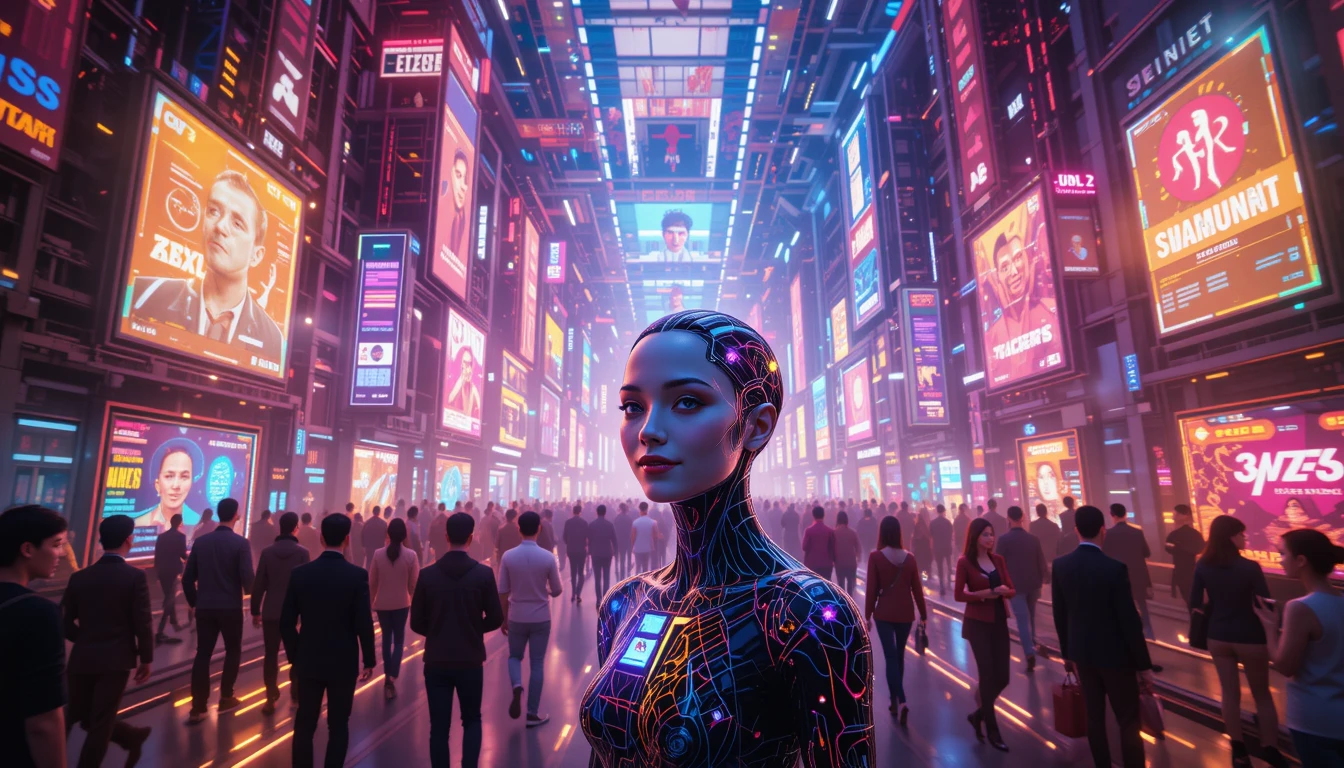
How to Build and Monetize a Hyper-Realistic AI Influencer
Build and Profit with a Hyper-Realistic AI Influencer
Discover step-by-step methods to create a hyper-realistic AI influencer and unlock powerful monetization strategies on platforms like FanVue and Instagram.
This article explores how to create a hyper-realistic AI influencer, detailing each phase from image upscaling and AI-based face swapping to training the model and monetizing the final product. With insights on using advanced tools and testing various settings, the content walks through every crucial step for crafting a consistent digital persona. Readers will learn AI influencer creation, effective content generation, and monetization strategies that include subscription models and sponsored collaborations.
Tutorial: Building Your AI Influencer
Creating a digital persona involves a blend of artistic vision and technical skill. This tutorial will guide you through the process, from generating the initial concept to bringing your AI influencer to life.
1. Conceptualization and Image Generation
The first step is to conceptualize your AI influencer. Consider the target audience and the niche you want to enter. Once you have a clear idea, you can use AI image generators to create the face of your influencer. Experts agree that it is crucial to select a face that resonates with current social media aesthetics, where balance, symmetry, and approachability combine to craft the perfect influencer look.
Top Tools for Image Generation:
Midjourney — A popular AI image generator known for creating artistic and realistic images from text prompts.
Stable Diffusion — An open-source model allowing for a high degree of customization and control over generated images.
DALL-E 3 — Developed by OpenAI, known for its ability to create highly detailed and creative images from natural language descriptions.
When generating your influencer’s face, aim for a look that is both unique and relatable. Experiment with different prompts and styles to find the perfect aesthetic.
2. Enhancing Image Quality and Realism
Once you have a base image, the next step is to enhance its quality to achieve a hyper-realistic look. This is where image upscaling tools come in.
AI has the potential to create images so crisp and natural that even experts might wonder if it emerged from the latest high-end camera rather than an elaborate AI process. When delving into image upscaling, choices range from low to high strength, but the medium setting frequently stands out for realism. As demonstrated by innovative AI creators using Pykaso AI, medium strength ensures intricate image details mimic the organic texture of professional lenses. This balance is critical; a well-upscaled image can effectively mask its AI origin.
It is essential to understand why medium strength delivers the most natural façade. Low strength upscaling offers almost negligible enhancement, while high strength settings can introduce artifacts that exaggerate edges or distort textures. The medium option, however, fine-tunes details by enhancing clarity while retaining authenticity. For more insights into the science behind this, explore resources like NVIDIA’s AI Research and Google AI.
To further refine details, employ proper parameters. A balanced 1:1 aspect ratio is ideal for social media platforms. The freedom level should be set to medium to minimize distortion. Another pivotal element is the use of negative prompts—instructions designed to control the AI by discouraging specific imperfections like unrealistic movements or blurriness. For more on refining AI-generated imagery, visit Adobe Creative Cloud and Smashing Magazine.
3. Creating Your Unique AI Influencer
With a high-quality face for your influencer, the next step is to create a full digital persona by combining it with a body using reference images and face-swapping tools.
Many creators turn to established influencers on Instagram for a diverse gallery of poses, angles, and expressions, using tools like igram.world to download up to 50 varied images. This diversity is essential for training the AI model to produce consistent results across different settings. Attention to detail is key; avoid repetitive shots or distracting features like prominent tattoos or heavy makeup, which might confuse the AI during training. Once the reference image is chosen, it must be uploaded into a specialized platform where face cropping aligns the image perfectly.
Once the images are prepped, a face swap operation is performed. Modern apps can execute this transition in around 10 minutes, transforming a static influencer image into a dynamic, consistent character across a multitude of poses with remarkable ease and coherence.
Top Face Swapping Tools:
Icons8 Face-Swapper — An online tool for easy face swaps in photos.
Reface — A popular app for quick face swaps in videos and GIFs.
Face-swapper — Provides a simple interface for face swapping in images.
4. Training and Generating Consistent Content
Crafting a consistent AI influencer requires robust training. This process starts by using 40 to 50 images with different poses and expressions as a comprehensive training dataset. The goal is to ensure the AI can generate a wide range of content featuring the influencer in varied yet cohesive styles.
The process is iterative, with creators often choosing from 1 to 5 training iterations, each lasting around 30 minutes, to fine-tune the character’s attributes. At the end of the training cycle, an AI image generator offers preset options to ensure the influencer’s images adhere to the preferred aesthetic. For instance, using an ultra-realistic preset with a square aspect ratio ensures content generated for Instagram retains clarity and consistency. A prompt like “a girl in a white bikini reading a book and posing for an image” can result in striking images that maintain the character’s style.
The benefits of these automated tools are multifold: enhanced efficiency, reduced error potential, and consistent output. This allows for the generation of not only static images but also dynamic video clips. By taking an upscaled image, setting the freedom level to medium, and using a controlled negative prompt, the tool can create a five-second, high-definition video. Once training is complete, you can generate content in bulk, calibrated for your brand identity.
The Rise of AI Influencers: An Academic Perspective
The rise of AI influencers represents a significant shift in digital marketing and media. Virtual personas crafted with sophisticated AI are not just a novelty but a powerful force in the creator economy.
Academics and industry analysts note that AI influencers offer several advantages. They can be available 24/7, are not prone to personal scandals, and can be perfectly tailored to specific brand aesthetics. Research from institutions like the MIT Media Lab highlights how their human-like qualities enable them to form connections with audiences. However, this also raises ethical considerations related to transparency, authenticity, and the potential to perpetuate unrealistic beauty standards. It is crucial for creators to be upfront about an influencer’s AI nature to maintain trust. These AI personas are already finding uses beyond marketing in education, virtual assistance, and entertainment, blurring the line between the real and the digital.
Monetization Strategies for Your AI Influencer
Monetizing an AI influencer transforms a digital persona into a revenue-generating asset. The process begins with consistently posting engaging, visually stunning content to build a following, then leveraging monetization platforms.
Top Monetization Platforms:
FanVue — Platform for AI-generated content supporting subscriptions and collaborations.
Patreon — A membership platform for exclusive content and direct fan support.
Instagram / TikTok — Platforms offering brand partnerships, sponsored posts, and creator funds.
A common model involves directing followers from Instagram to a FanVue page for subscriptions (e.g., $7.50/month) and exclusive premium content (e.g., $30/item). As the influencer’s following expands, so does the potential for strategic brand partnerships with fashion, lifestyle, and tech companies. Use posting prompt generators like ChatGPT to streamline ideation; feeding it an image with the prompt, “Generate me a prompt for this image so I can use it in an AI image generator to recreate something similar,” provides a ready-to-use prompt, further simplifying content creation.
This automated workflow frees creators from tedious manual editing, allowing them to focus on broader strategies like content themes and audience engagement. Strong narratives built on consistent, high-quality visuals make the influencer attractive for partnerships and help grow an engaged community. This model, executed well, can generate thousands of dollars monthly, proving the profitable convergence of art, technology, and strategy.
Final Thoughts
The evolution from upscaling images to building and monetizing a full-fledged digital persona encapsulates the precision of artificial intelligence and the creativity of digital marketing. With strategic use of AI algorithms, meticulous selection of reference images, a robust training protocol, and innovative monetization strategies, today’s creators are well-equipped to forge a future where AI not only creates art but also drives economic growth. The future is here, and with every AI-generated image, it demonstrates that the intersection of art and technology is not just innovative but also incredibly profitable.